


https://avltoday.6amcity.com/george-masa-history-asheville/
Before WNC’s natural beauty routinely graced travel publications and social media accounts, there was a time when its most awe-inspiring sights remained unknown, unexplored, and largely undocumented. That is, until George Masa entered the frame in the early 1900s.
Masa, an intrepid, tenacious + diligent photographer, dedicated his life to exploring and documenting the rugged swaths of land that are now recognized as the Appalachian Trail, Pisgah National Forest, and the Great Smoky Mountains National Park.

George Masa poses with his cameras. | Photo courtesy of Buncombe County Special Collections
And the scope of his work was far more than pretty pictures — his photography is credited as one of the main reasons the Smoky Mountains gained the support necessary to become a national park. Historians also attribute Masa with sparking powerful social change in the realms of conservation and preservation.
Want a closer snapshot of his life? Let’s look back at how he found Asheville in the first place — and the impressive legacy he left behind.
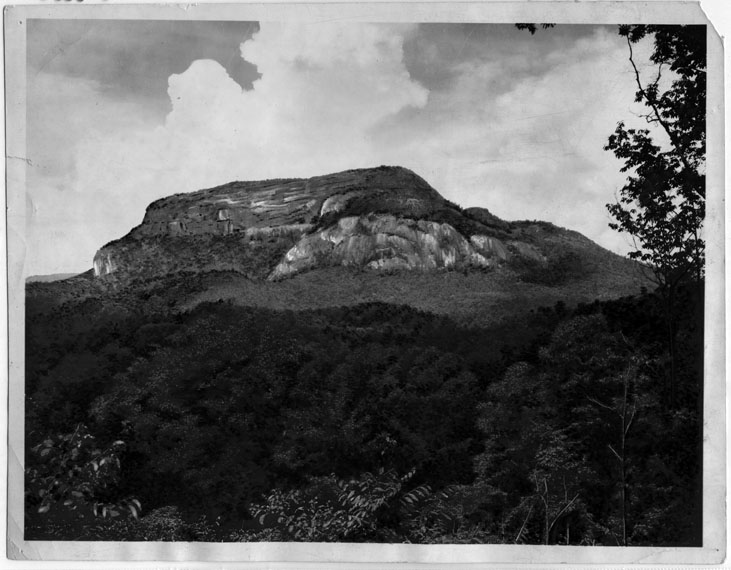
A Masa capture of Whiteside Mountain. | Photo courtesy of Buncombe County Special Collections
From Osaka to Asheville
A Japanese immigrant, he was born Masahara Izuka in Osaka in the early 1880s. While the details are murky, historians believe that in 1905 he stole passage on a ship to San Francisco as a 25-year-old and started going by George after converting to Christianity. After devoting a decade to traveling the country by rail, he reached Asheville in 1915 and took up work at the Grove Park Inn as a laundry worker, bellhop, and eventually a valet. It was then that he shortened his name from Masaharu to Masa, as a matter of convenience.
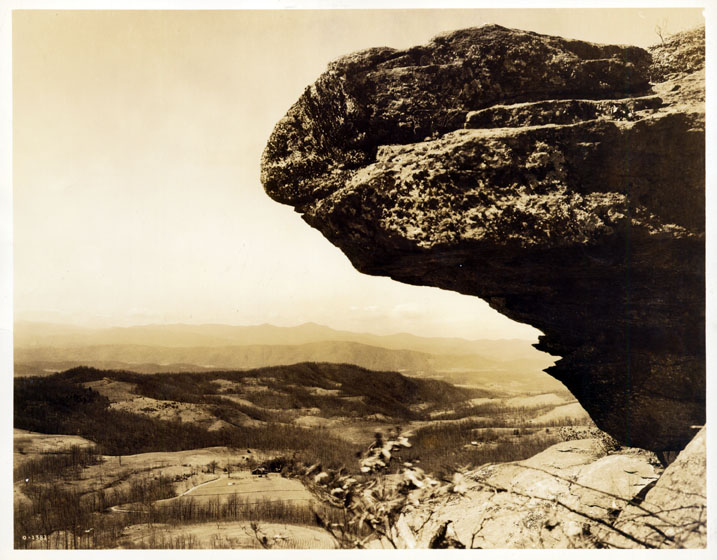
Masa original of Hendersonville’s Jump Off Rock. | Photo via Buncombe County Special Collections
The peak of his career
Once a camera found its way into Masa’s hands, his life changed forever. He began lugging a heavy, 8 x 10 inch camera (along with a wooden tripod and odometer setup) through our region’s most rugged landscapes.
And through the remainder of his life, he mapped out hundreds of uncleared trails in the Southern Appalachian Mountains, including a considerable chunk of the modern-day Appalachian Trail that runs from the Virginia-NC border down to Georgia.