


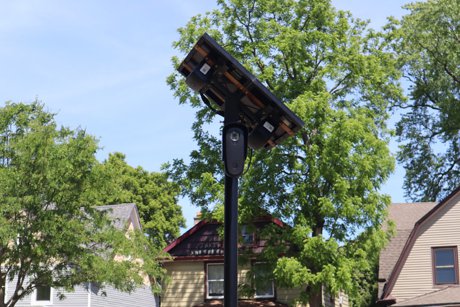
Thinking about buying a home in an HOA community? There’s a new question you may want to add to your due-diligence checklist: Does the neighborhood use surveillance cameras or license plate readers?
Homeowners associations are increasingly turning to technology to improve neighborhood security and monitor community activity. Automatic license plate reader (ALPR) systems, including Flock Safety cameras, are appearing in more HOA-governed communities across the country.
For some homeowners, that added layer of security is a major benefit. For others, it raises important questions about privacy, data collection and who has access to information about their comings and goings.
As this technology becomes more common, understanding how an HOA uses surveillance technology can be an important part of evaluating a property before you buy.
Security Feature or Privacy Concern?
The answer may depend on the buyer.
Some HOAs view license plate reader cameras much like gated entrances, neighborhood patrols or security systems. Cameras can record license plates and vehicle characteristics as cars enter and leave a community, potentially helping with investigations involving theft, burglary, vandalism or trespassing.
For buyers who prioritize neighborhood security, that may be a welcome amenity.
But other buyers may have concerns about being monitored every time they enter or leave their neighborhood.
Questions might include:
- Is my license plate being recorded?
- Who owns the information?
- How long is the data stored?
- Who has access to the recordings?
- Can the HOA share information with law enforcement or other organizations?
- Can residents opt out of having their information retained?
- Where are the cameras located?
- Does the system monitor only HOA-owned property, or nearby public roads as well?
These aren't necessarily deal-breaker questions. But they are questions worth asking before you purchase.
HOA Documents May Not Tell the Whole Story
One of the challenges for buyers is that HOA governing documents may not specifically address newer surveillance technologies.
According to a recent report from the National Association of REALTORS®, some HOA documents are silent on the use of license plate readers and other surveillance systems. That means a buyer reviewing the standard HOA documents may not necessarily get a complete picture of what technology is being used in the community.
In some situations, the best way to find out may be to ask the HOA directly.
That's an important distinction when purchasing a home in an HOA: reviewing the covenants, conditions and restrictions (CC&Rs) is important, but so is asking questions about how the community is actually being managed today.
And It's Not Just License Plate Cameras
Technology in HOA communities is evolving quickly.
According to NAR's report, some HOAs are beginning to explore artificial intelligence tools that can monitor properties and identify potential covenant violations. Those systems could potentially flag things such as overgrown grass, trash cans left out beyond designated times or other possible violations.
The potential benefit is efficiency. Instead of relying entirely on a property manager or another homeowner to identify a violation, technology can flag an issue for review.
But how much monitoring is too much?
For homeowners, the answer may vary considerably.
What Should Buyers Ask Before Buying in an HOA?
If you're considering a home in an HOA-governed community, don't limit your investigation to the monthly dues and architectural restrictions. Consider asking:
1. Does the HOA use surveillance cameras?
Find out whether the community has security cameras, automatic license plate readers or other monitoring technology.
2. Where are the cameras located?
Are they at neighborhood entrances? Near amenities? Along roads? Understanding their locations can help you understand what is actually being monitored.
3. What information is collected?
A license plate reader may collect information about vehicles without using facial recognition, but buyers should still understand exactly what data the system records.
4. How long is information retained?
Ask about the HOA's data-retention policy and whether there is a defined period for deleting information.
5. Who can access the information?
Is access limited to HOA management? Board members? Security personnel? Law enforcement? A third-party technology company?
6. Can information be shared?
Ask whether the HOA can provide surveillance information to law enforcement or other third parties and under what circumstances.
7. Does the HOA have a written surveillance policy?
A written policy can provide considerably more clarity than simply knowing cameras exist.
8. Does the HOA use AI or automated monitoring?
This may become increasingly relevant as communities adopt technology capable of identifying potential property violations.
Why This Matters During a Real Estate Purchase
Buying a home isn't just about the house itself.
You're also buying into a community, neighborhood and set of rules. And those rules can affect how you use and experience your property.
That's particularly important with HOA communities because buyers may not discover certain policies until after they have already committed to the property.
This is where having an experienced real estate professional on your side can make a difference.
A good buyer's agent shouldn't simply open the door and point out the granite countertops. They should help you identify the questions that need to be answered before you move forward.
That can include reviewing HOA documents, identifying potential restrictions, asking questions of the listing agent or HOA when appropriate, and helping you understand which issues deserve additional investigation.
What About HOAs in Western North Carolina?
HOAs are common throughout the Asheville area and Western North Carolina, from established neighborhoods around Asheville and Weaverville to newer communities throughout Buncombe, Madison, Henderson and surrounding counties.
Security cameras and license plate readers may not be a deciding factor for most buyers today, but technology is changing quickly.
For one buyer, a camera at the neighborhood entrance might mean peace of mind.
For another, it might feel like an invasion of privacy.
Neither perspective is necessarily right or wrong. The important thing is knowing what you're buying into and deciding whether the community's policies fit your priorities.
Buying a Home in Western North Carolina?
At Blue Ridge Properties Group, we believe buying a home is about more than finding the right house. It's about finding the right community, neighborhood and lifestyle for you.
If you're considering an HOA property in Asheville, Weaverville or elsewhere in WNC, we're here to help you ask the right questions and do your homework before you make a decision.
Have questions about buying a home in an HOA? Contact Blue Ridge Properties Group and let's talk about what you should know before you buy.
Read the full article from the National Association of REALTORS® HERE.