
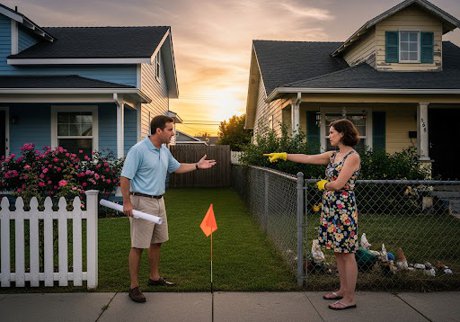
Buying a home in WNC often means more than finding the right house. You may also need to understand shared driveways, private roads, property boundaries, septic systems, and structures that sit close to a neighboring property.
Two terms that frequently come up during real estate transactions are easements and encroachment agreements. While both can affect how you use a property, they address different legal situations.
Understanding the difference can help buyers and sellers avoid surprises during due diligence and make more informed real estate decisions.
What Is an Easement?
An easement is a legal right to use someone else's land for a specific purpose, without owning that land. In North Carolina, an easement is an interest in real property.
For example, a property owner may have an easement that allows them to:
-
Use a shared driveway across a neighbor's property.
-
Access a landlocked parcel.
-
Install or maintain utility lines.
-
Cross another property to reach a road or other necessary access point.
Example: A shared mountain driveway
Imagine you purchase a home in Madison County that sits behind another property. The only way to reach your house is by traveling across your neighbor's driveway.
If a properly created easement grants your property the right to use that driveway, the easement establishes the legal right of access. An easement appurtenant generally benefits one parcel of land and passes with that land when it is sold.
That means the right of access is connected to the property; not simply a personal favor from the current neighbor.
Important things to know about easements
An easement does not automatically mean you can use the entire property. Its location, purpose, and conditions are determined by the applicable deed, recorded instrument, or other legal basis.
For example, a driveway easement may allow access but not give you the right to park, widen the driveway, remove trees, or install utilities unless those rights are included or otherwise established.
The takeaway: An easement establishes a right to use land for a defined purpose. It does not transfer ownership of that land.
What Is an Encroachment Agreement?
An encroachment occurs when a structure, improvement, or other physical feature crosses onto land where it does not have the necessary legal right to be.
Common examples include:
-
A fence that extends across a property line.
-
A garage or shed that sits partially on a neighboring parcel.
-
A driveway that crosses the boundary.
-
A retaining wall or deck that extends beyond the owner's property.
-
A septic-related improvement or utility feature that crosses a boundary.
An encroachment agreement is a written arrangement addressing an existing or proposed encroachment. Depending on its terms and legal structure, it may grant permission for the encroachment to remain, establish responsibilities, or require removal under specified conditions.
Example: A fence that crosses the property line
Let's say you are buying a home in Weaverville, and the seller's backyard fence extends approximately two feet onto the neighbor's property.
The fence may have been there for years. The neighbors may have always been aware of it. But the physical location of the fence does not, by itself, establish that the seller owns the land underneath it or has a permanent right to keep the fence there.
An encroachment agreement could address the situation by documenting the fence's location and the parties' agreement about its continued existence, maintenance, or removal.
The exact rights depend on the agreement and applicable law.
Easement vs. Encroachment Agreement: The Key Difference
An easement creates a legal right to use another person's property for a specified purpose, such as access or utilities.
An encroachment agreement addresses a physical improvement or use that crosses a property boundary and establishes what the parties have agreed to do about it.
An easement and an encroachment agreement can sometimes exist together. For instance, a driveway may cross an easement area, and the parties may need a separate agreement to address a particular structure or improvement.
Why This Matters When Buying a Home in WNC
In the mountains, property boundaries and access arrangements can be particularly important. A home may have a beautiful driveway, a detached garage or a useful outbuilding, but what matters is whether the legal documents support the way the property is being used.
Here are some situations where buyers should pay close attention.
1. Shared driveways and private roads
A shared driveway may involve an easement, a private road maintenance agreement, or both.
Questions to ask:
-
Who has the legal right to use the driveway?
-
Is the easement recorded?
-
Who is responsible for maintenance and repairs?
-
Are there restrictions on parking, gates, or improvements?
-
Does the legal description match the actual driveway location?
A driveway that has been used for decades is not necessarily the same thing as a properly documented easement.
2. Fences and property boundaries
A fence that crosses a property line can create questions about ownership, maintenance, and future disputes.
If a survey identifies an encroachment, the buyer should understand whether the seller has a written agreement with the neighboring property owner and what that agreement actually provides.
3. Garages, sheds, and other structures
An outbuilding may appear to be entirely on the property but extend over the boundary or into an easement.
This can matter if you plan to:
-
Expand the structure.
-
Replace or rebuild it.
-
Add a deck or porch.
-
Install utilities.
-
Sell the property in the future.
An existing structure does not automatically mean future improvements are permitted.
4. Septic systems and utility access
WNC properties frequently rely on private septic systems, wells, and shared infrastructure.
A septic drainfield, well access, or utility line may involve an easement or another legal arrangement. It is important to distinguish between the right to access or use land and the physical location of an improvement.
For example, a septic system may be located on a neighboring parcel under a recorded easement. Alternatively, a pipe or improvement may physically cross a boundary and require a separate agreement.
Do not assume that an easement for access automatically authorizes every type of construction or utility installation.
What Should Buyers Review During Due Diligence?
If you are purchasing a property and discover an easement or encroachment agreement, these are the documents and questions worth reviewing with your real estate attorney.
1. The recorded deed and easement documents
Review the legal description, location, purpose, parties, and any restrictions.
2. A current survey
Determine whether fences, structures, driveways, and other improvements cross property lines or easement areas.
3. Any encroachment agreement
Check who signed it, what it permits, whether it is recorded, and whether it binds future owners.
4. The practical responsibilities
Understand maintenance, repair, access, insurance, removal obligations, and any costs associated with the arrangement.
Questions to ask before closing
-
Is the easement or agreement recorded with the county Register of Deeds?
-
Does the document describe the actual location of the driveway, fence, or structure?
-
Does it run with the land, or is it limited to particular individuals?
-
Does it authorize the current use?
-
Could the arrangement affect future construction or resale?
-
Are there unresolved disputes with neighboring property owners?
North Carolina easement law can be fact-specific. A recorded document, survey, and the parties' actual use of the land may all matter in determining the rights involved.
What Sellers Should Know
Sellers should disclose known property issues honestly and provide relevant documents during the transaction.
If you know that a fence, shed, driveway, or other improvement crosses onto neighboring land, it is important to address the issue rather than assume it will go unnoticed.
A buyer may request:
-
A survey.
-
A copy of the easement.
-
A copy of an encroachment agreement.
-
Written clarification from the neighboring property owner.
-
An agreement to resolve the encroachment before closing.
Whether a particular document is sufficient, whether an agreement must be recorded, and whether a particular encroachment can remain are legal questions. Sellers should consult a North Carolina real estate attorney before signing a new agreement or attempting to resolve a boundary dispute.
Final Thoughts: Know What You Are Buying
An easement and an encroachment agreement may sound similar, but they serve different purposes.
An easement is generally about a legal right to use land. An encroachment agreement is about addressing a physical improvement or use that crosses a property boundary.
Both can affect access, construction, maintenance, and future ownership. That is why reviewing these documents during due diligence is an important part of buying property in Western North Carolina.
At Blue Ridge Properties Group, we believe that understanding the details of a property is just as important as falling in love with the view. Our team can help you identify questions to ask, locate relevant documents, and coordinate with the appropriate professionals as you move through the real estate process.
Thinking about buying or selling property in Western North Carolina? Contact Blue Ridge Properties Group to connect with our local real estate team.